
Creator Commerce Architecture Launch
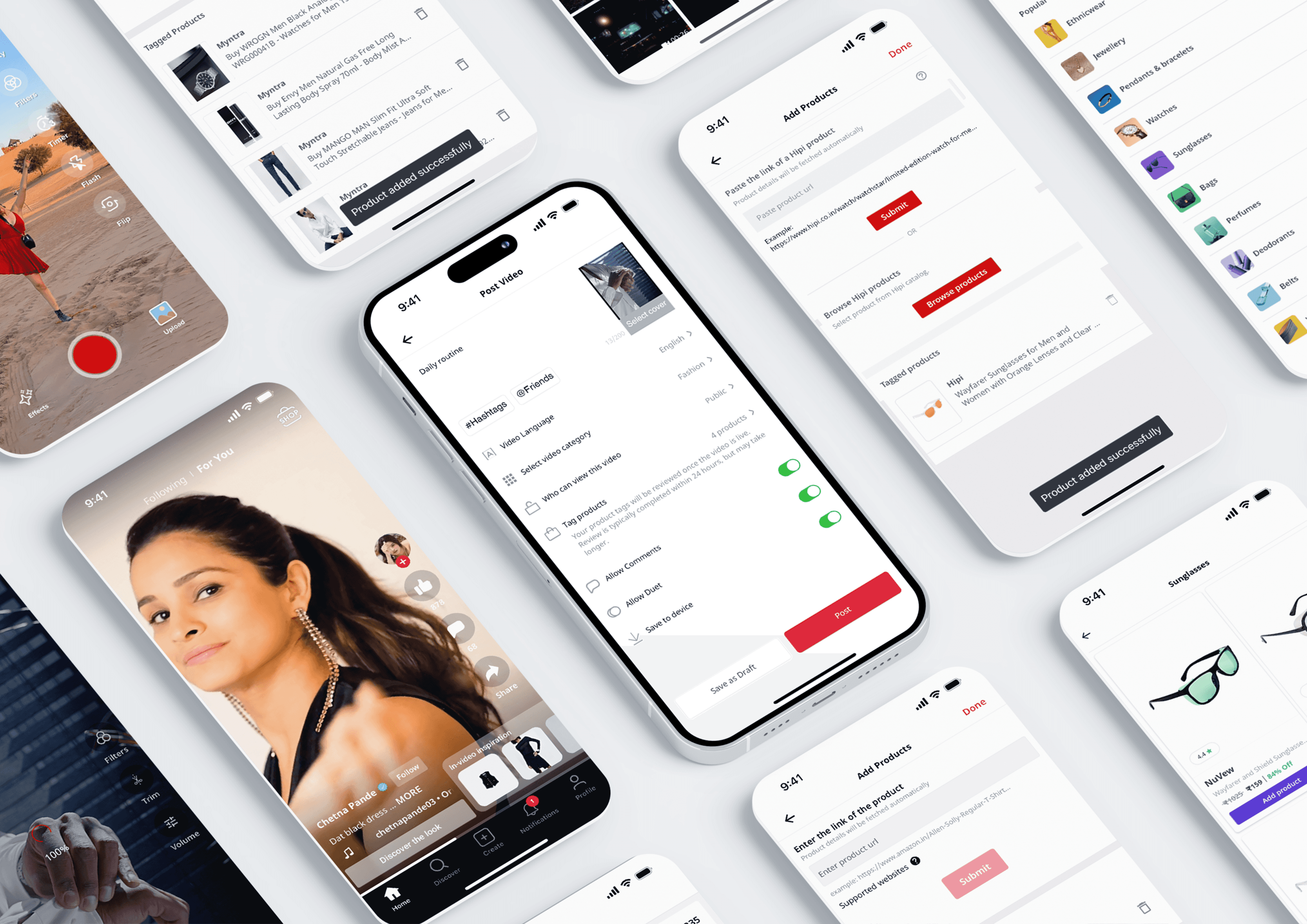
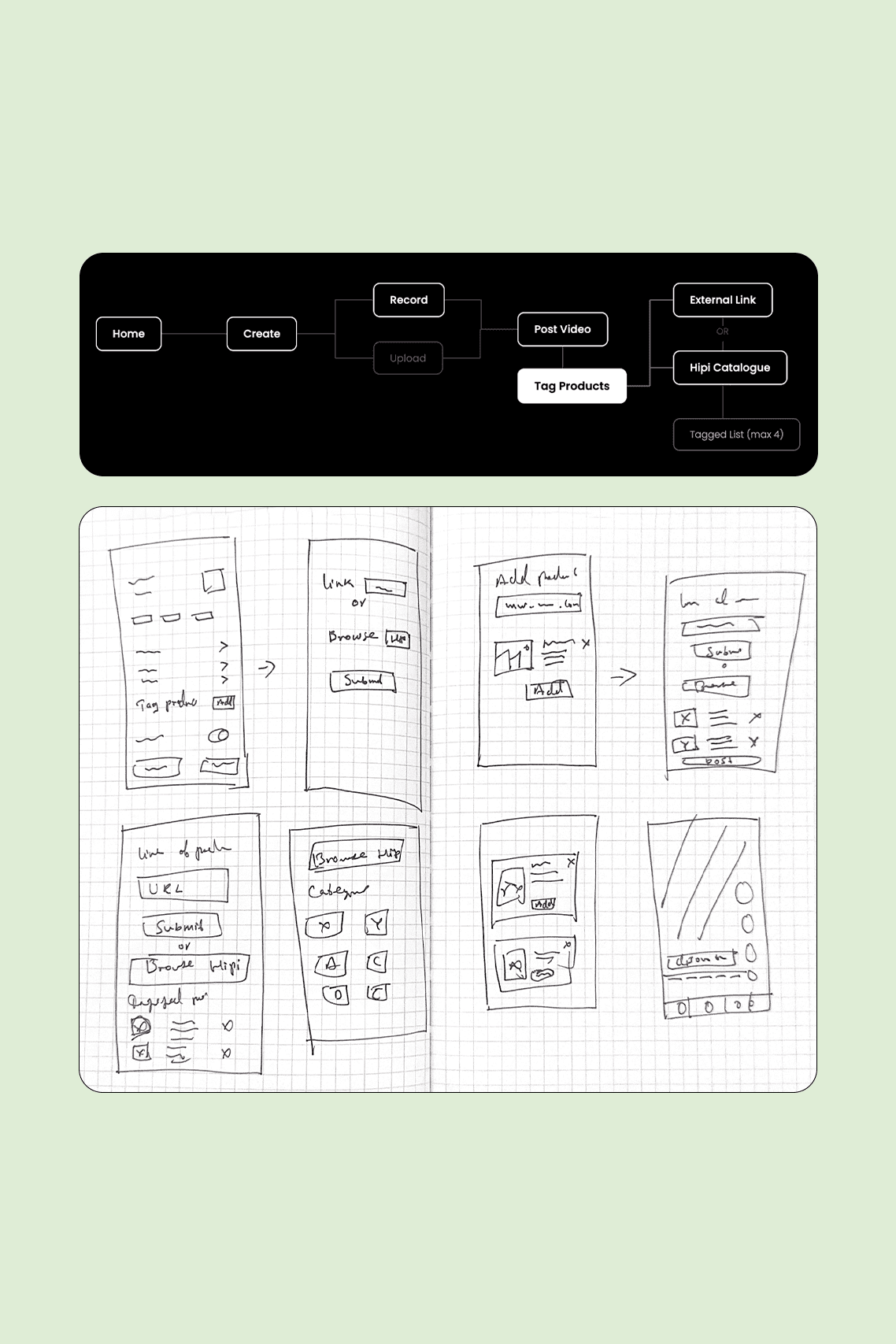
Hipi, a short-video platform by Z5, empowers Indian creators to create, share, and monetize content across diverse audiences. To strengthen creator ownership and monetization, we introduced Tag Your Products a feature that allows creators to manually tag up to four products from Hipi’s in-app catalog or add external product links directly to their videos.
4-6 Months
Product Design + Strategy
Product Manager (Monetisation)
Backend Engineers
ML Engineers
Android & iOS Developers
QA Team
Tools
Figma
Miro
Maze
Mixpanel
The Problem
Creators lacked ownership over the products showcased within their videos, despite those products being directly tied to their content and personal brand.
The existing ML-driven auto-tagging system assigned products without creator input, often resulting in inaccurate or loosely matched items, which reduced monetization potential, weakened audience trust, and forced creators to share correct product links outside the platform.
The Goal
The goal of this project was to restore creator control over product tagging while maintaining a seamless upload experience. We aimed to enable accurate product selection, support both in-app and external commerce, and strengthen monetization without increasing friction in the content creation flow.
+35%
Manual Tagging Adoption Rate
+25%
Increase in Product CTR
-41%
Product Mismatch Reduction
UX Process
Research & Analysis:
We conducted qualitative creator interviews, funnel analysis, and complaint data review to understand the gap between automated product tagging and creator expectations.
Interviewed 10 fashion and lifestyle creators across Tier 1-3 cities to uncover monetization behaviours and tagging frustrations.
Analysed Upload → Post funnel drop-offs to detect friction introduced by product uncertainty.
Reviewed customer complaints and support tickets related to incorrect product tagging.
The research revealed that product accuracy is directly linked to creator credibility and income, and lack of control was pushing creators to monetize outside the platform.
Pain Points:
“The tagged product is not the one I used.”
No option to add affiliate links from Myntra/Amazon.
Fear of losing credibility when followers complain.
No visibility into what product will be shown before posting.
User Personas Summary:
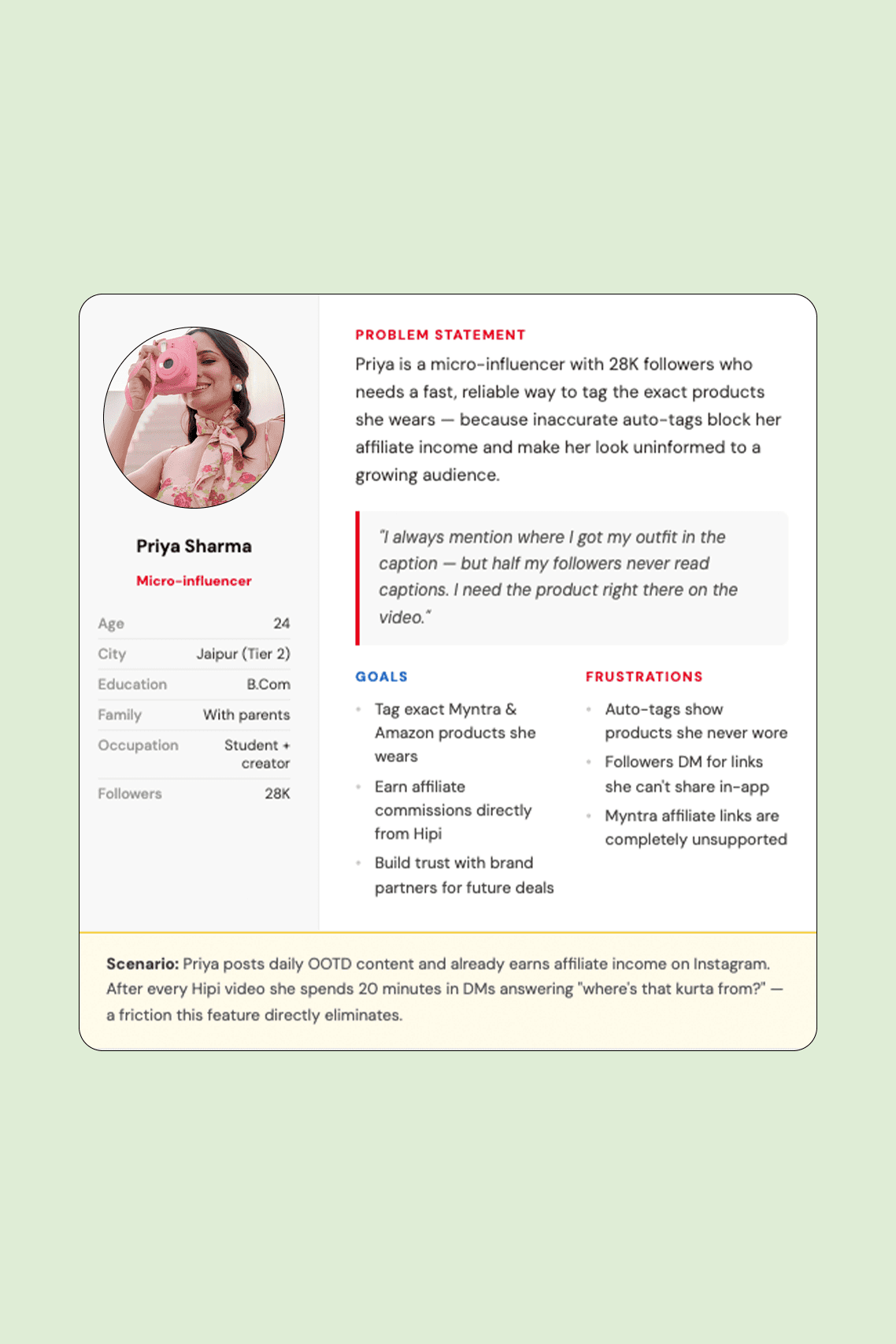
The primary users were fashion and lifestyle creators aged 18-32 from Tier 1-3 cities, actively looking to monetize their short-form content. Most regularly use platforms like Instagram, YouTube Shorts, Myntra, and Amazon, and are familiar with affiliate commerce. For them, accurate product tagging directly impacts credibility, audience trust, and earning potential.
User Journey Summary:
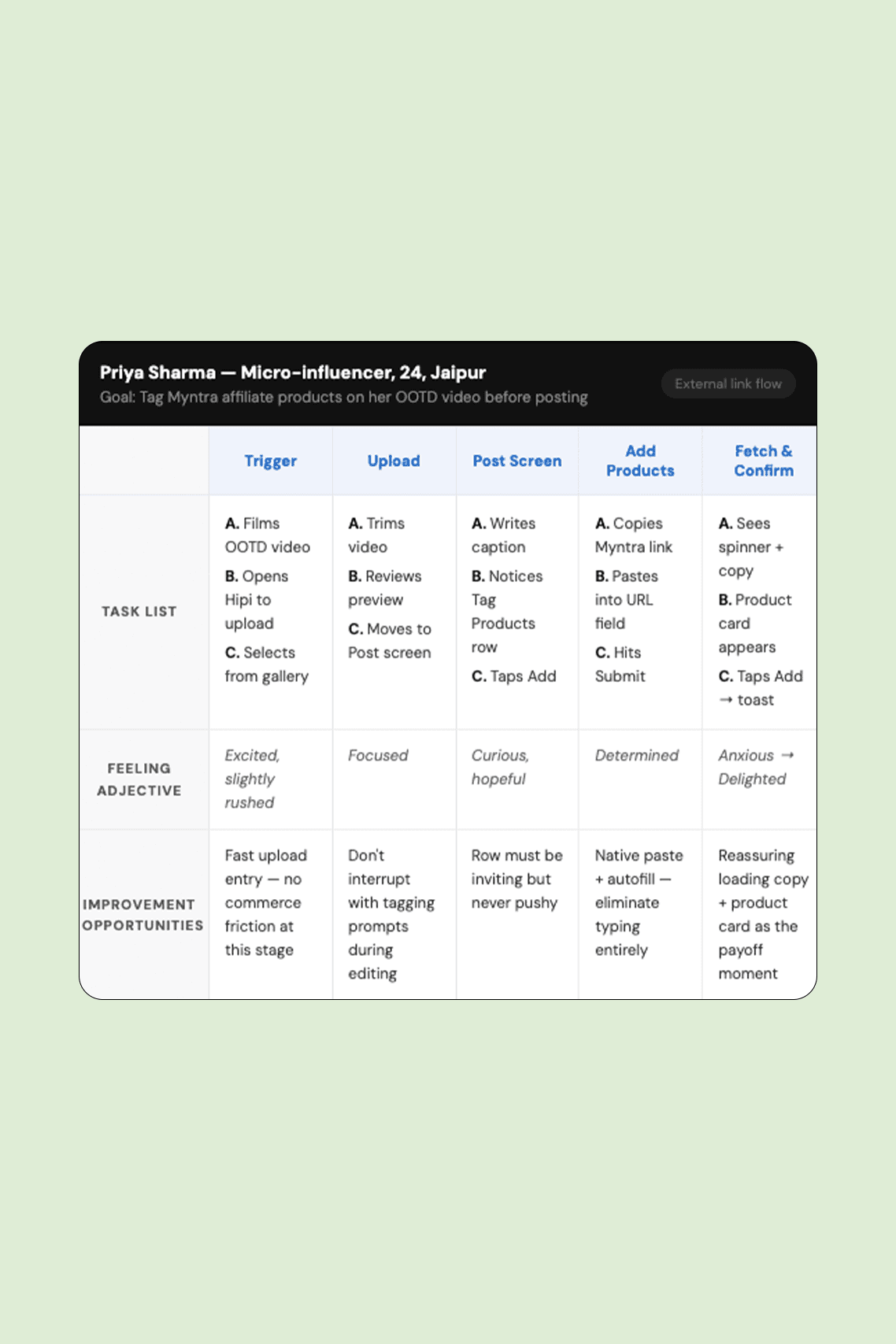
Creators typically upload styling and lifestyle videos, mention products verbally, and later respond to follower requests for purchase links. When auto-tagging was inaccurate, they shared correct links through DMs or other platforms instead of relying on in-app tagging. This workaround revealed a clear gap between content creation and seamless commerce integration.
Information Architecture & Wireframes
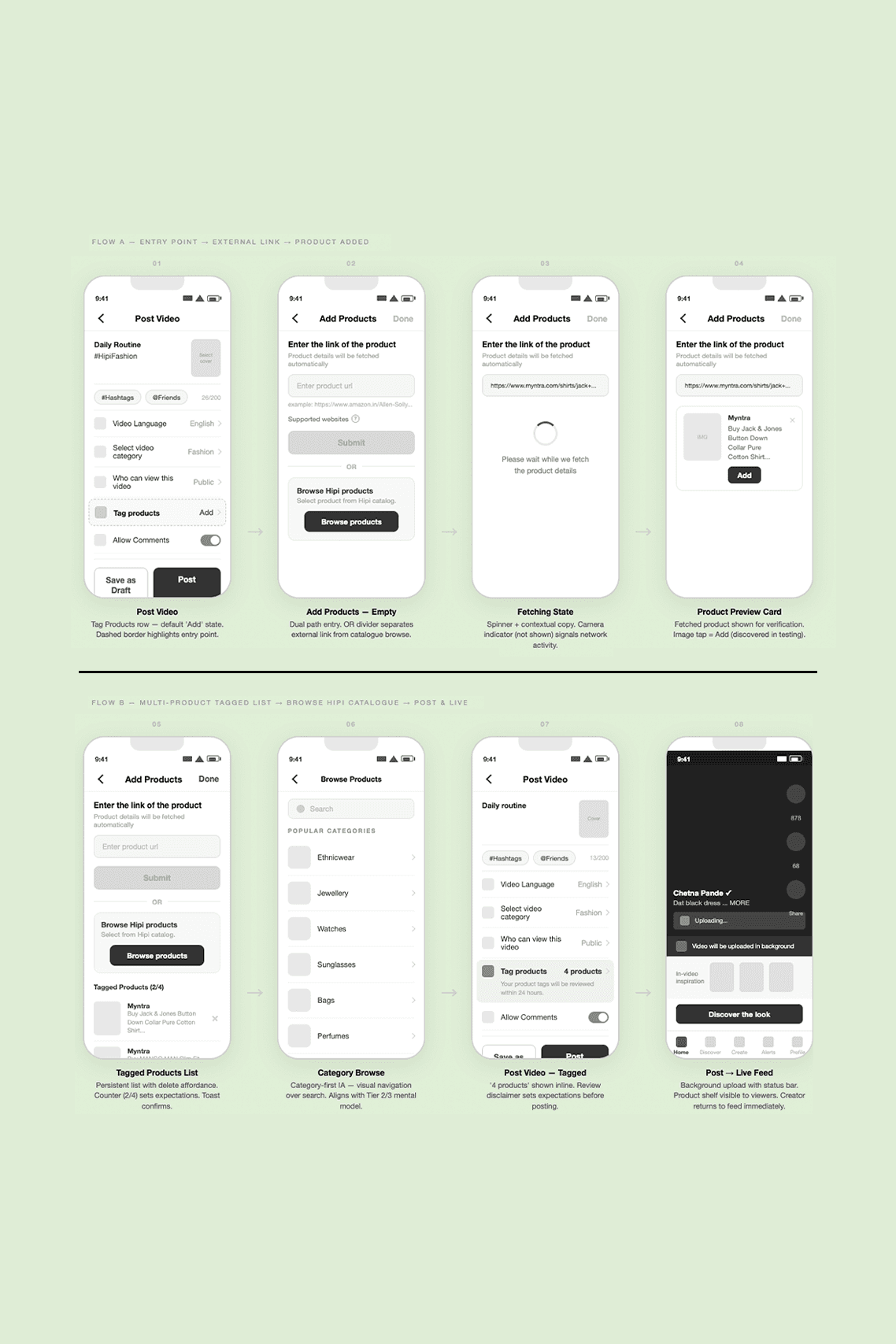
Product Experience Walkthrough
Usability Analysis & Product Impact
Usability Analysis:
We conducted moderated prototype testing with six fashion and lifestyle creators to evaluate clarity, task completion, and friction within the tagging flow. Improvements were made to link validation feedback, the dual-option structure (Browse + Add Link), and the visibility of the 4-product limit to reduce cognitive load before publishing.
Product Impact:
Following the launch, adoption of manual tagging increased steadily, accompanied by higher product click-through rates driven by improved relevance and accuracy. Reports of incorrect product mapping declined, and creators demonstrated greater trust in monetizing within the platform instead of redirecting audiences to external channels.